
How Custom Pool Covers Save Dallas-Fort Worth Homeowners Thousands on Maintenance
Every pool owner in Dallas, Fort Worth, and surrounding areas…


If you stepped outside in Dallas-Fort Worth this week, you felt it: the first cold fronts of the season are pushing through North Texas, and the long, brutal stretch of 100-degree days is finally loosening its grip. After a summer of triple-digit heat at DFW Airport, temperatures are swinging 10 to 30 degrees behind each front. Fall is coming fast — and for pool owners from Plano to Southlake, this is the single most important season to get ahead of what that weather change does to your pool.
North Texas doesn't ease into fall — it lurches. One afternoon it's 93 degrees, two days later a strong norther drags highs down to the upper 50s. The National Weather Service records DFW's average first freeze around November 22, but the earliest freeze on record hit October 22. In between, our pools get hit by a perfect storm of seasonal stress:
Nov 22
Average first freeze in DFW — earliest ever was Oct 22
30°F+
Temperature swings behind a single fall cold front
Sept–Oct
Peak ragweed and fall pollen in North Texas
October and November bring peak leaf drop across Collin, Denton, Dallas, and Tarrant counties. Every leaf that sinks into your pool releases organics that feed algae, throw off your chlorine demand, and — worst case — leave stubborn stains on plaster and pebble finishes. A pool under oak or pecan trees can need skimming every single day in peak season. Skimmer baskets clog, pumps strain, and by the time the water turns cloudy, you're already behind.
It isn't just leaves. Ragweed peaks across DFW in September and October, and dry fall winds push dust straight into your water. Pollen and dust create cloudiness that looks like a chemistry problem — so homeowners dump in more chemicals when the real fix is keeping that debris out in the first place. Meanwhile, each cold front's rain dilutes chlorine, raises pH, and washes phosphates and organics from your yard straight into the pool.
Then there's the cold itself. North Texas freeze events are notorious — sudden, hard, and damaging to pumps, filters, heaters, and plumbing that weren't winterized. Texas pools also remember February 2021. The pool owners who coast through winter are the ones who prepped in fall.
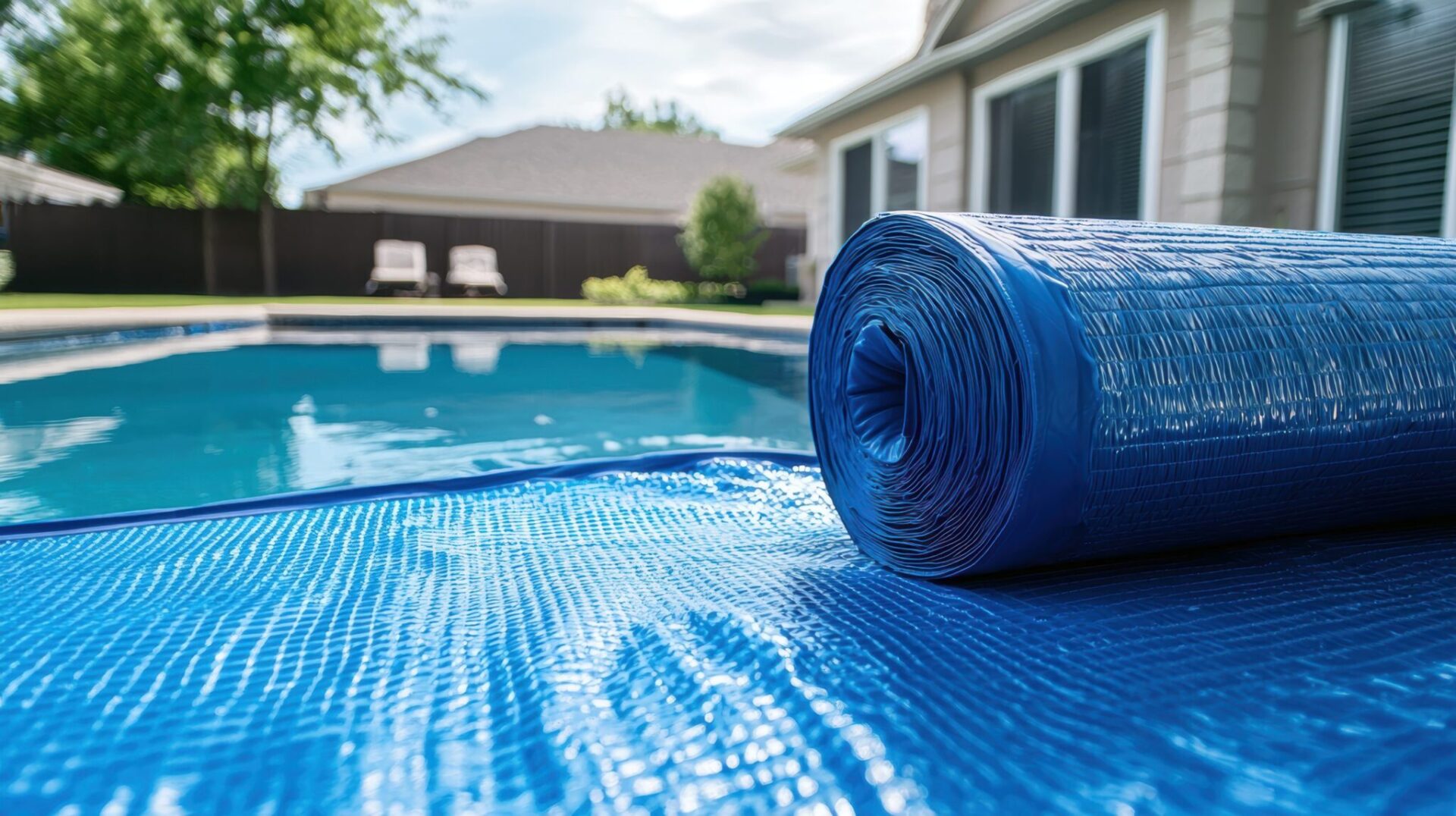
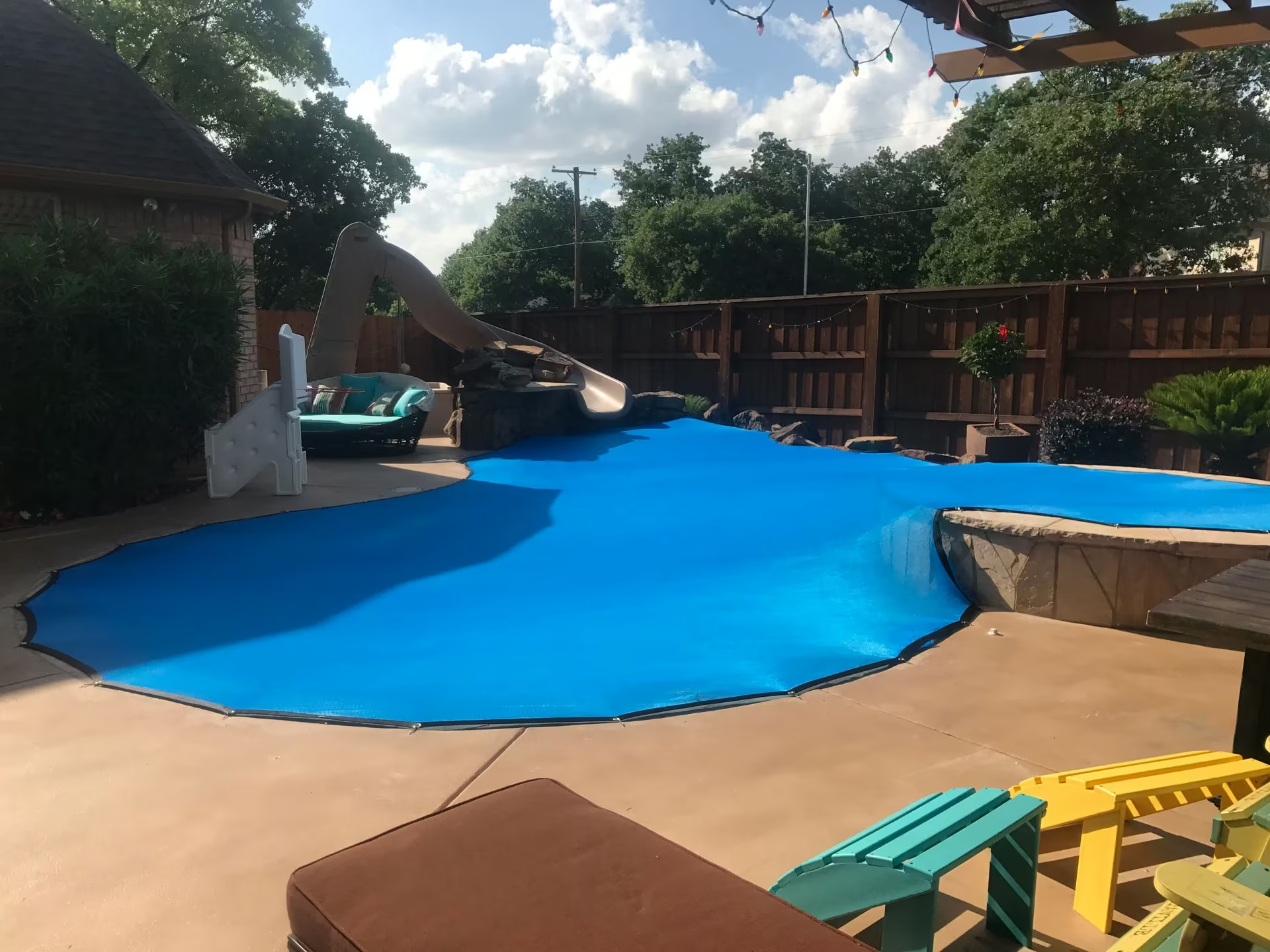
Store-bought tarps and sandbag covers fail on Texas pools — they can't handle rock walls, raised spas, waterfalls, or freeform shapes, and they leave ugly spring anchors and water bags scattered around your deck. A custom-fitted mesh leaf cover is engineered for your pool's exact dimensions: high-density polyethylene mesh that stretches instead of tearing, solid brass anchors that sit flush with any deck (about the size of a nickel), and a fit so precise that one adult can take it off in 5–10 minutes and put it back on in 15–20. Rain drains through, so there's never a puddle of standing water breeding mosquitoes on top. Backed by a 10-year warranty and built for Texas sun, it's the difference between a green, stained pool in March and a pool that opens clean in spring.
Don't spend your October fighting leaves with a net pole. At Pool Leaf and Safety Covers, we custom-manufacture and professionally install mesh leaf covers, ASTM-certified pool safety nets, and removable mesh pool fences for homeowners across Dallas-Fort Worth and Austin — including Plano, Frisco, Allen, McKinney, Richardson, Southlake, and everywhere in between. No subcontractors, ever — just our own fully trained technicians, free on-site measurements, and covers built to fit your pool exactly. Call us today at (214) 762-1804 or request your free quote online, and this fall the only leaves you'll deal with are the ones in your yard — not your pool.
Get My Free Quote 


Contact our local experts and discover how Pool Leaf & Safety Covers can protect your loved ones, reduce your pool maintenance, and transform your backyard experience.
